




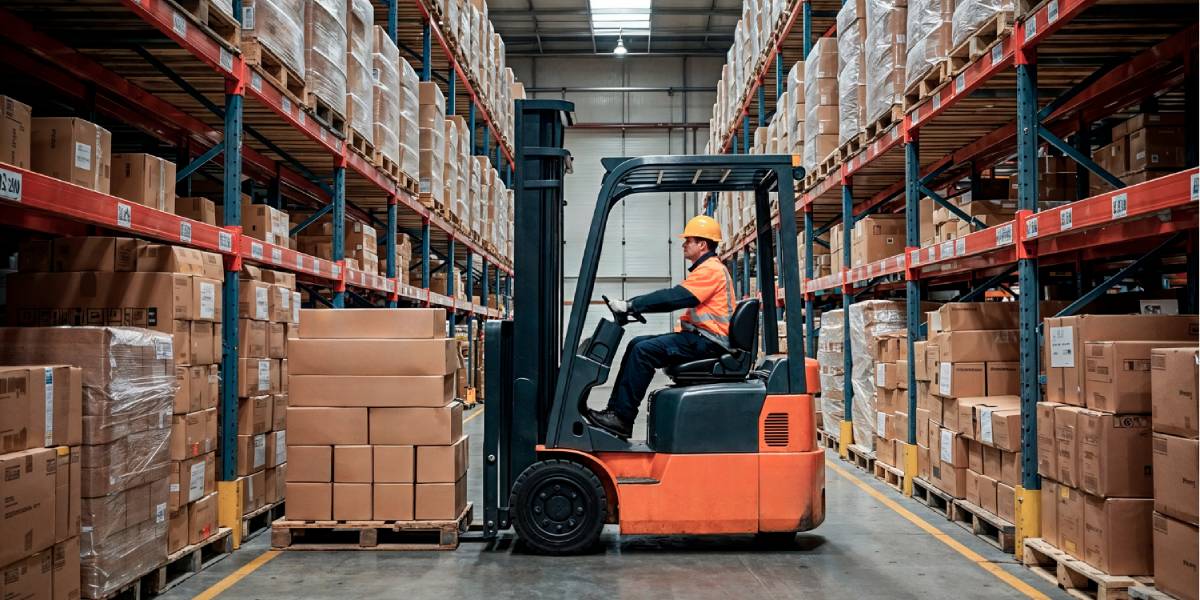
Walk into a warehouse in Jeddah, Riyadh, or Dammam, and you’ll notice something quickly: no two operations run the same way. Aisle widths vary, ceiling heights differ, and loads come in different sizes.
That’s why choosing a forklift isn’t a one-size-fits-all decision. The right machine depends on how your warehouse operates, what you’re lifting, and where you’re moving it. If you’re wondering how to choose the right forklift, here are the key factors to consider.
Start with What You’re Actually Lifting
Before looking at specifications, start with your typical loads. What’s the average weight? What’s the heaviest pallet you handle? A forklift’s rated capacity depends on more than the number on its nameplate. Load weight, load center, lift height, and attachments all affect how much the machine can safely handle.
When considering how to choose a forklift for a warehouse, look at your heaviest regular loads and the conditions in which they’ll be lifted. The goal isn’t to find the highest capacity forklift, but one that provides the right capacity for your actual work.
Measure Your Space Before Choosing a Model
Aisle width is one of the easiest things to overlook when buying a forklift. A machine that looks ideal on paper may be difficult to maneuver once it enters your racking layout. Measure your aisle widths, turning areas, doorways, and loading bays before choosing a model.
If your warehouse uses narrow aisles and tall racking, a reach truck may suit you better than a standard counterbalance forklift. In larger open areas, counterbalance forklifts offer more flexibility for loading, unloading, and general material handling. This is one of the first things any practical forklift selection guide should cover, since your layout quickly narrows down which machines will work safely.
Know the Types of Forklifts for Warehouses
There are several types of forklifts for warehouses, and each is designed for different jobs.
Counterbalance forklifts are a common choice for general material handling and come in different capacities and power configurations.
Reach trucks suit warehouses with high racking and narrower aisles, letting operators position pallets at greater heights with less aisle space.
Order pickers suit operations where workers pick individual products rather than move complete pallets.
Electric forklifts work well for indoor applications. They run quietly and produce no tailpipe emissions, which matters where air quality and noise are a concern.
You can explore Toyota material handling equipment to compare different solutions for warehouse and material handling applications.
Diesel and LPG forklifts suit demanding applications with heavier loads or outdoor operation. The Toyota 4FD135 forklift, for example, is built for high-capacity material handling work.
Think About Power Source and Duty Cycle
Power source is a key part of your warehouse forklift selection. Consider where the forklift will operate, how many hours it will run each day, and whether your facility has suitable charging or refueling arrangements.
Diesel forklifts suit heavy-duty and outdoor work, while LPG models offer flexibility between indoor and outdoor use, subject to site requirements and safety rules. Duty cycle matters too. If your warehouse runs multiple shifts, battery capacity and charging infrastructure need to be considered before choosing an electric forklift.
Don’t Overlook Lift Height and Mast Type
Your racking system also plays a major role in forklift selection. Measure the highest storage position you need to reach and check the clearance above racks, doors, and sprinklers. Different mast configurations offer different lift heights and visibility, so the right choice depends on your layout.
Don’t select a mast based solely on maximum lifting height. The forklift should reach your required storage positions while maintaining the stability and capacity specified by the manufacturer.
Factor in After-Sales Support
Buying the forklift is only the beginning. Maintenance, spare parts, repairs, and operator support all affect the long-term value of your equipment. After-sales support should be part of your forklift selection guide from the start. Look for a supplier with genuine spare parts, trained technicians, and solutions that help reduce downtime.
Abdul Latif Jameel Machinery provides after-sales and rental services covering maintenance, genuine spare parts, and equipment rental, useful when your warehouse faces unexpected repairs or a spike in demand.
Bring Your Forklift Selection Together
Choosing the right forklift comes down to matching the machine to your actual working conditions. Start with your load requirements, measure your aisles, check your racking height, and choose the right power source. Don’t forget the service support behind the machine either. A forklift that fits your warehouse but is difficult to maintain can become a problem over time.
If you’re still deciding how to choose the right forklift, Abdul Latif Jameel Machinery can help you evaluate the available options based on your warehouse requirements. With Toyota material handling equipment and support services available across Saudi Arabia, you can choose equipment based on the work it actually needs to perform.