

Abdul Latif Jameel Machinery | Hunger Station announce a Strategic Agreement
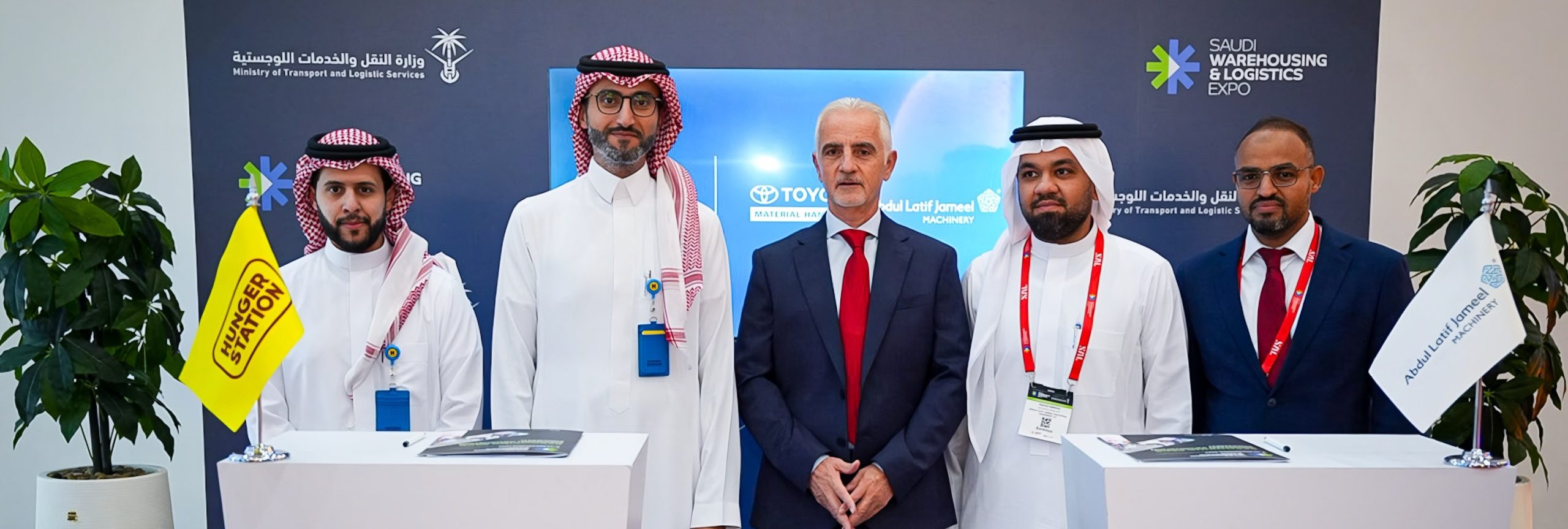
We are thrilled to announce a landmark strategic agreement between Abdul Latif Jameel Industrial Equipment and HungerStation | هنقرستيشن signed live at the Saudi Warehousing & Logistics Expo. Under this strategic agreement, we will supply comprehensive material handling equipment featuring Toyota’s latest technology in safety and clean energy, and dedicated operational support across all their locations in the Kingdom to optimize fulfillment, enhance safety, and drive seamless growth. Thanks to the teams whose dedication brought this partnership to life. We look forward to achieving great milestones together.
How to Choose the Right Forklift for Your Warehouse Operations
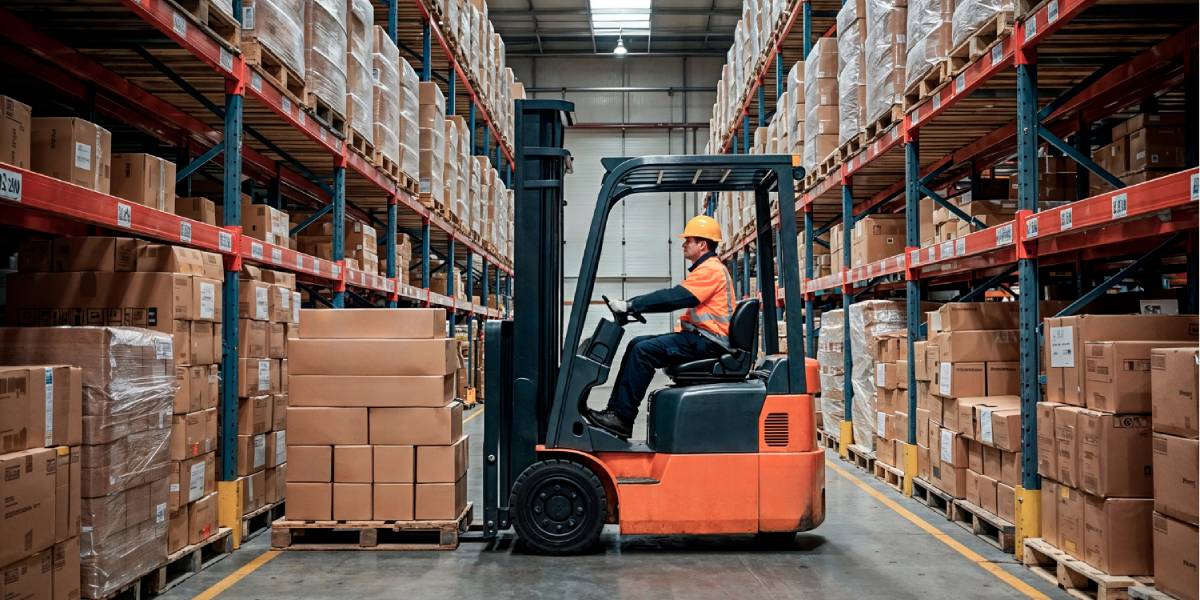
Walk into a warehouse in Jeddah, Riyadh, or Dammam, and you’ll notice something quickly: no two operations run the same way. Aisle widths vary, ceiling heights differ, and loads come in different sizes. That’s why choosing a forklift isn’t a one-size-fits-all decision. The right machine depends on how your warehouse operates, what you’re lifting, and where you’re moving it. If you’re wondering how to choose the right forklift, here are the key factors to consider. Start with What You’re Actually Lifting Before looking at specifications, start with your typical loads. What’s the average weight? What’s the heaviest pallet you handle? A forklift’s rated capacity depends on more than the number on its nameplate. Load weight, load center, lift height, and attachments all affect how much the machine can safely handle. When considering how to choose a forklift for a warehouse, look at your heaviest regular loads and the conditions in which they’ll be lifted. The goal isn’t to find the highest capacity forklift, but one that provides the right capacity for your actual work. Measure Your Space Before Choosing a Model Aisle width is one of the easiest things to overlook when buying a forklift. A machine that looks ideal on paper may be difficult to maneuver once it enters your racking layout. Measure your aisle widths, turning areas, doorways, and loading bays before choosing a model. If your warehouse uses narrow aisles and tall racking, a reach truck may suit you better than a standard counterbalance forklift. In larger open areas, counterbalance forklifts offer more flexibility for loading, unloading, and general material handling. This is one of the first things any practical forklift selection guide should cover, since your layout quickly narrows down which machines will work safely. Know the Types of Forklifts for Warehouses There are several types of forklifts for warehouses, and each is designed for different jobs. Counterbalance forklifts are a common choice for general material handling and come in different capacities and power configurations. Reach trucks suit warehouses with high racking and narrower aisles, letting operators position pallets at greater heights with less aisle space. Order pickers suit operations where workers pick individual products rather than move complete pallets. Electric forklifts work well for indoor applications. They run quietly and produce no tailpipe emissions, which matters where air quality and noise are a concern. You can explore Toyota material handling equipment to compare different solutions for warehouse and material handling applications. Diesel and LPG forklifts suit demanding applications with heavier loads or outdoor operation. The Toyota 4FD135 forklift, for example, is built for high-capacity material handling work. Think About Power Source and Duty Cycle Power source is a key part of your warehouse forklift selection. Consider where the forklift will operate, how many hours it will run each day, and whether your facility has suitable charging or refueling arrangements. Diesel forklifts suit heavy-duty and outdoor work, while LPG models offer flexibility between indoor and outdoor use, subject to site requirements and safety rules. Duty cycle matters too. If your warehouse runs multiple shifts, battery capacity and charging infrastructure need to be considered before choosing an electric forklift. Don’t Overlook Lift Height and Mast Type Your racking system also plays a major role in forklift selection. Measure the highest storage position you need to reach and check the clearance above racks, doors, and sprinklers. Different mast configurations offer different lift heights and visibility, so the right choice depends on your layout. Don’t select a mast based solely on maximum lifting height. The forklift should reach your required storage positions while maintaining the stability and capacity specified by the manufacturer. Factor in After-Sales Support Buying the forklift is only the beginning. Maintenance, spare parts, repairs, and operator support all affect the long-term value of your equipment. After-sales support should be part of your forklift selection guide from the start. Look for a supplier with genuine spare parts, trained technicians, and solutions that help reduce downtime. Abdul Latif Jameel Machinery provides after-sales and rental services covering maintenance, genuine spare parts, and equipment rental, useful when your warehouse faces unexpected repairs or a spike in demand. Bring Your Forklift Selection Together Choosing the right forklift comes down to matching the machine to your actual working conditions. Start with your load requirements, measure your aisles, check your racking height, and choose the right power source. Don’t forget the service support behind the machine either. A forklift that fits your warehouse but is difficult to maintain can become a problem over time. If you’re still deciding how to choose the right forklift, Abdul Latif Jameel Machinery can help you evaluate the available options based on your warehouse requirements. With Toyota material handling equipment and support services available across Saudi Arabia, you can choose equipment based on the work it actually needs to perform.
Heavy Equipment Maintenance: How Preventive Maintenance Reduces Downtime
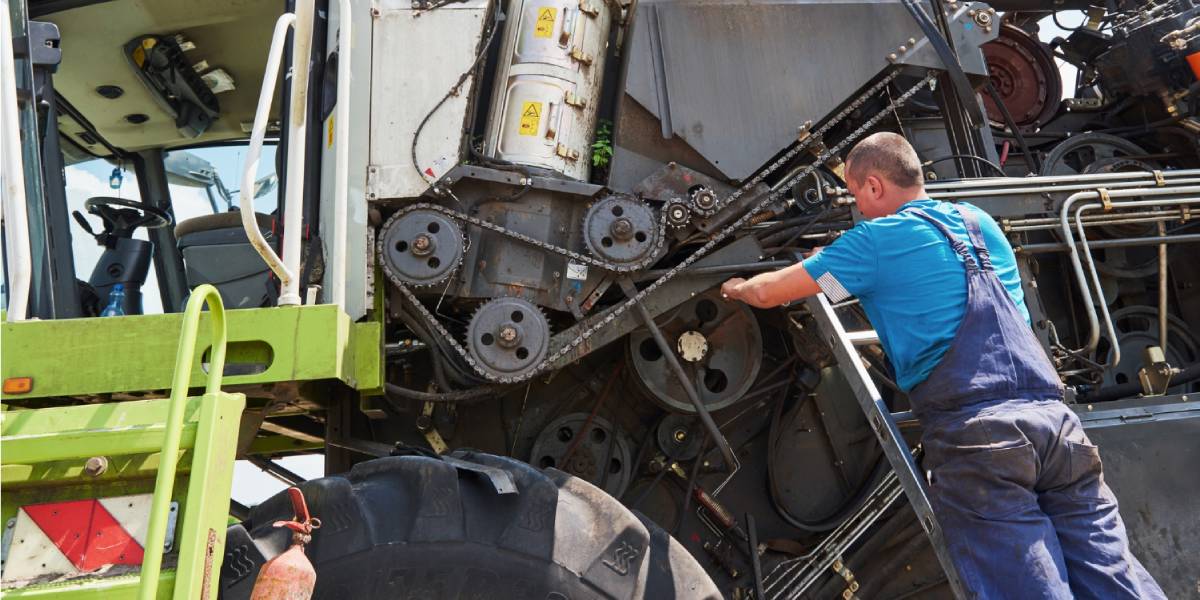
A machine breakdown rarely costs only the price of the repair. When an excavator, loader, or forklift stops working, operators may sit idle, projects can fall behind, and replacement equipment or parts may need to be arranged quickly. For fleet owners and site managers, these disruptions can add up fast. That is why heavy equipment maintenance should be part of everyday operations, not something handled only after a machine fails. A planned maintenance program helps identify problems early, control repair costs, and keep equipment available when it is needed. Why Preventive Maintenance Matters Preventive maintenance for heavy equipment focuses on finding and addressing problems before they cause an unexpected breakdown. Instead of waiting for a hydraulic hose to burst or an engine to overheat, technicians inspect, lubricate, adjust, and replace components according to a planned schedule. The schedule should follow the manufacturer’s recommendations while also considering operating hours, workload, and working conditions. Equipment working long shifts in dusty or demanding environments may require closer attention than machines used occasionally. Heavy machinery maintenance also gives businesses better control over their schedules. Planned service can be arranged during quieter periods, reducing the chance that an unexpected repair will interrupt an important job. The Real Cost of Unplanned Downtime Consider an excavator that stops halfway through a construction project. The repair itself may be manageable, but the surrounding costs can quickly become more serious. Operators may be unable to work, other crews may have to wait, deadlines can move, and temporary equipment may need to be hired. Heavy equipment preventive maintenance cannot prevent every mechanical problem, but it can reduce the risk of failures caused by predictable wear and neglected service. Regular inspections, fluid checks, filter replacement, lubrication, and component monitoring can reveal warning signs before a small issue becomes a major repair. For fleet managers, this also makes maintenance costs easier to plan. Instead of dealing with repeated emergency repairs, teams can budget for scheduled servicing and replacement parts. Building a Heavy Equipment Maintenance Checklist A useful heavy equipment maintenance checklist should start with the manufacturer’s service requirements and then be adjusted to the machine’s actual working conditions. Depending on the equipment, routine checks may include: Inspecting tires, tracks, forks, attachments, hydraulic lines, and warning lights Checking engine oil, hydraulic fluid, coolant, and other required fluid levels Following filter replacement and lubrication intervals Checking batteries, cables, and charging systems Testing brakes, steering, controls, and other safety-related functions Looking for leaks, unusual sounds, vibration, overheating, or visible damage Recording inspections, repairs, operating hours, and replaced components Daily inspections are particularly useful because operators are often the first people to notice a change in how a machine sounds or performs. Reporting that change early gives technicians a chance to investigate before the equipment fails. Keeping maintenance records is equally important. A clear service history helps identify recurring problems, track component life, and understand the overall condition of a machine. It can also provide useful documentation when equipment is resold or retired. Key Areas That Deserve Regular Attention Hydraulic systems: Hydraulic leaks, damaged hoses, and contaminated fluid can affect performance and damage expensive components. Regular inspections and fluid analysis can help identify problems early. Engine and cooling systems: Low coolant, clogged radiators, worn belts, and cooling-system problems can contribute to overheating. Checking these areas during scheduled service can help avoid unnecessary downtime. Tires and undercarriage: Tires, tracks, rollers, and other undercarriage components experience constant wear. Uneven wear can indicate operating or alignment issues and should be investigated before the damage spreads. Electrical and battery systems: Batteries, connections, charging systems, and electrical components deserve regular checks, particularly on electric forklifts and other material handling equipment. How ALJ Machinery Supports Preventive Maintenance Abdul Latif Jameel Machinery provides service support to help equipment owners maintain reliable machine performance. Its dedicated service teams can support maintenance needs, while service and maintenance agreements can help businesses plan routine care around their operations. Reliable parts availability is another important part of reducing downtime. When a worn component is identified, having access to the required replacement part can help prevent a short maintenance stop from becoming a prolonged equipment outage. For businesses using Toyota material handling equipment, equipment support and monitoring solutions can also help teams track operating hours and keep scheduled maintenance from being overlooked. Final Thoughts Heavy equipment maintenance is not about avoiding every repair. Machines work hard, and components will eventually wear out. The goal is to identify that wear early and deal with it before it stops the job. A consistent maintenance schedule, supported by a practical checklist, accurate service records, and dependable parts and technical support, can help businesses reduce unexpected downtime and get more productive hours from their equipment. If your fleet is due for a maintenance review, ALJ Machinery’s service and parts teams can help you plan the support your operation needs.
Abdul Latif Jameel Machinery prepares the ground for the new future at NEOM.
Abdul Latif Jameel Machinery is playing a vital role in the construction and development of one of the World’s most ambitious new mega-developments. NEOM is described as a vision of what a new future may look like; the estimated US$ 500 billion regional development in northwest Saudi Arabia on the Red Sea being built from the ground up as a living laboratory, and a place where entrepreneurship will chart the course for this new future. The team at Abdul Latif Jameel Machinery secured a new contract with key groundworks contractor, Al Asast Al Watanya Co., which sees the provision of an initial seven Komatsu D275 Dozers. Each unit specialized for mining, heavy-duty and large-scale civil works, featuring powerful engines, sigmadozer blades, and unparalleled operator comfort and safety in the segment. The 50-tonne machines have been sold to the contractor to create construction access from Highway 55 to Area 4 and Zone E site preparation works.
Abdul Latif Jameel helps drive cleaner Mobility in line with Saudi’s net Zero 2060 target
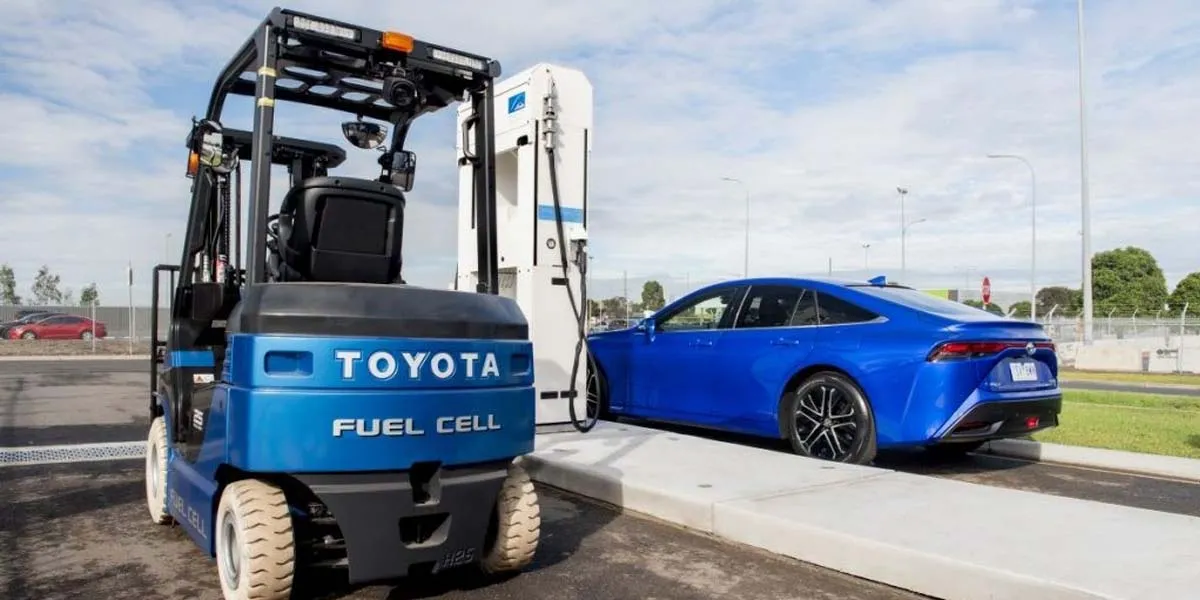
Abdul Latif Jameel Motors and Abdul Latif Jameel Machinery, reinforced their contribution to the Kingdom’s Net Zero 2060 ambition by accelerating the introduction of vehicles with an enhanced performance in terms of efficiency and environmental impact to the Saudi market. As part of this drive, Abdul Latif Jameel partnered with prominent Saudi companies at the 2021 roadshow to demonstrate the latest in hydrogen fuel technology. The roadshow took place across the Eastern Province of Saudi Arabia throughout 2021, and aimed to showcase innovative hydrogen-fueled transport solutions, while promoting their broad adoption. The roadshow emphasized and showcased hydrogen fuel cell vehicles (cars, buses, and forklift trucks) and associated hydrogen dispensing infrastructure. By helping to develop a market for hydrogen-based fuels, Abdul Latif Jameel Motors, and Abdul Latif Jameel Machinery aim to advance low-carbon solutions in the transportation sector, while simultaneously promoting a future of mobility aligned with Saudi’s Vision 2030. Raad Al-Saady, Chairman of Abdul Latif Jameel Machinery and Vice President of Mobility of Abdul Latif Jameel, commented: “We understand that the future of mobility needs to be based on technology with low-carbon emissions performance, such as clean hydrogen. That is why we are collaborating with prominent Saudi companies to explore new technologies while ensuring that our future products remain as relevant and appreciated as they are today.” Abdul Latif Jameel was founded more than 75 years ago as an automotive company with a vision to empower local communities and provide new opportunities. Today, the automotive industry continues to drive technological innovations and advance mobility while recognizing the need to improve their environmental performance. During the roadshow, Abdul Latif Jameel Motors showcased a Toyota Mirai hydrogen fuel cell car, while Abdul Latif Jameel Machinery exhibited a Toyota hydrogen-powered forklift truck. The Toyota Mirai is among the first hydrogen fuel cell vehicles to be mass-produced and sold commercially. Aside from hydrogen-fueled models, various vehicles and machinery with high efficiency and environmental performance, including the Toyota Corolla hybrid electric (HEV) model and a range of Toyota electric emissions-free forklift trucks, were demonstrated. The Toyota Corolla HEV model combines two power sources consisting of a petrol engine and two electric motors and offers the lowest fuel consumption value in its category at 27.6 km/L. The emissions-free forklift trucks are powered by lithium-ion batteries, which provide an extended maintenance-free lifetime. Abdul Latif Jameel Motors and Abdul Latif Jameel Machinery attended a roadshow geared towards raising awareness around the application of new transport technologies that help address climate change concerns, including visits to the Royal Commission of Jubail and Yanbu. These events were attended by business partners and stakeholders, senior management, employees and dependents, and notable media representatives. The roadshow was followed by the signing of an historic MoU between the Ministry of Energy at the Ceremony for Hydrogen Applications in Transportation, whereby, Abdul Latif Jameel Motors and Abdul Latif Jameel Machinery were able to showcase innovative pilot projects for hydrogen fuel cell-based cars, buses, and various other transportation applications. Hero image: photo credit ©: Toyota Motor Corporation, Japan
Abdul Latif Jameel Machinery Celebrates Komatsu’s Centennial Anniversary
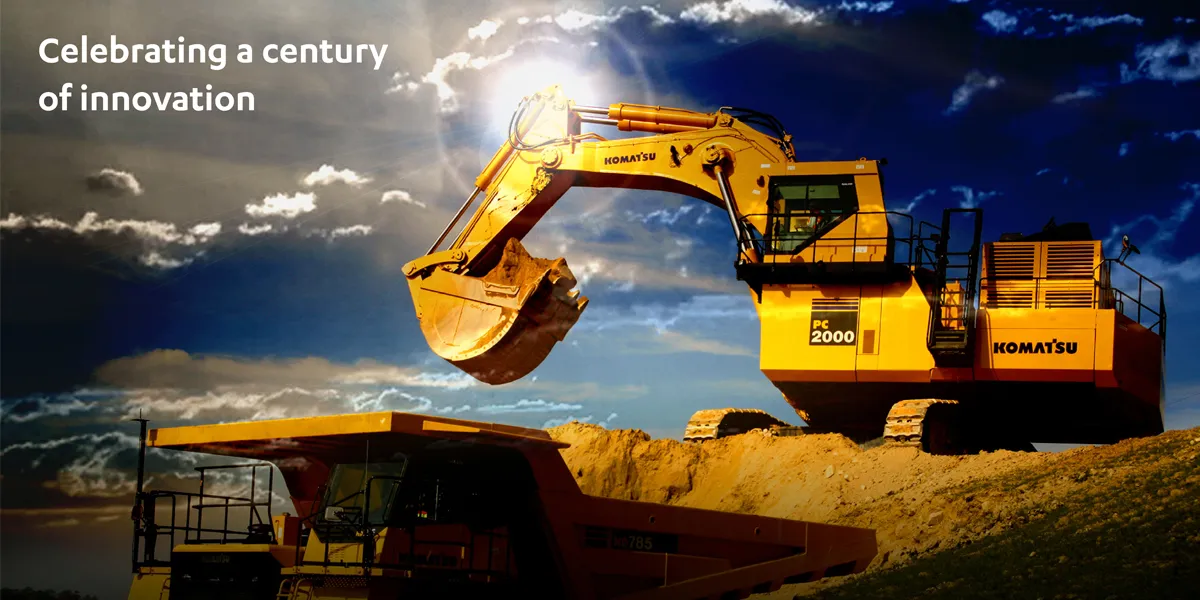
Abdul Latif Jameel Machinery is celebrating world-renowned equipment manufacturer Komatsu’s centenary anniversary. Komatsu is set to mark this milestone with a series of activities and objectives centered around the company’s commitment to its new brand promise of ‘Creating Value Together’ – a sentiment shared in Abdul Latif Jameel Machinery’s ‘Partnership Without Borders’ approach. Following an agreement in 2012, Abdul Latif Jameel Machinery invested in state-of-the-art custom-built 5S facilities in Jeddah and Riyadh. These facilities across Saudi Arabia ensure that Abdul Latif Jameel Machinery is in close proximity of its clients. By providing world-class equipment coupled with top-quality aftersales services, the team of highly skilled Abdul Latif Jameel Machinery Associates strive to continually provide much more than just products, but truly live the shared vision of ‘creating value together’ by offering comprehensive and tailored business solutions. Raad Al-Saady, Chairman of the Board, Abdul Latif Jameel Machinery, said: “Komatsu has been our trusted supplier for almost a decade. Abdul Latif Jameel Machinery and Komatsu share a similar commitment to championing innovation, sustainable development, community empowerment, and the advancement of human potential. In almost the same year that Abdul Latif Jameel marks our own 75th anniversary, we are delighted to also be celebrating Komatsu’s centenary. We wish them every success in the future.” Takao Morito, General Manager of Komatsu, Saudi Arabia, said: “Komatsu has outlined four broad objectives as part of its brand promise to coincide with its centennial celebrations. The first is to affirm and define its corporate identity through reflecting on its corporate growth – shaped by its forerunners and well aligned with its synergies with society. The second objective is the launch of the “One World One Komatsu” employee-driven social contribution project, Komatsu’s first global platform that is open to all Komatsu group employees around the world. Upon its launch, the exclusive platform will consolidate individual voluntary efforts and open them up for the participation of the wider employee base. The third objective that the company has outlined is to achieve safe, highly productive, smart and clean workplaces of the future. The fourth objective is the renewal of ‘Komatsu-no-mori’ in its home-base of Komatsu City. The company opened ‘Komatsu-no-mori’ in 2011 as part of its 90th anniversary commemorative project as a place to develop human resources on a global scale and to nurture children together with the local communities. This facility is being revamped for the 100th anniversary celebrations and will reopen on May 14 after the completion of the project.” Since 1921, Komatsu’s investments in core capabilities, innovative technologies and strategic partnerships have seen them become an industry benchmark. Their commitment to proving ‘dantotsu’ (ダントツ or best of the best) quality, reliability, insights and support for global partners have sustained their success and fortified their status as an industry vanguard. Established in Komatsu City, Ishikawa Prefecture in Japan, Komatsu is the second largest manufacturer of construction and mining equipment in the world with operations across Asia, Americas and Europe – is committed to quality and reliability, and works to maximize the trust of customers, shareholders, distributors, suppliers, business partners, and all other stakeholders.
Abdul Latif Jameel Industrial Equipment Saudi Arabia receives the Bronze Award in the Toyota Materials Handling International Awards for 2019
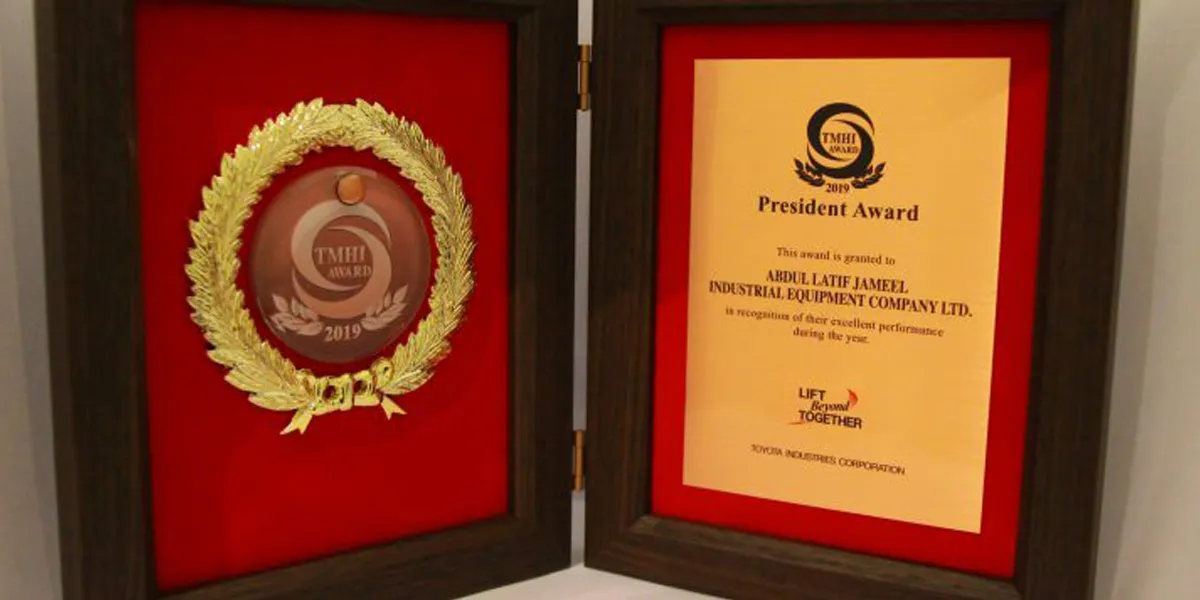
Congratulations to Abdul Latif Jameel Industrial Equipment Saudi Arabia for receiving the Bronze Award in the Toyota Materials Handling International Awards for 2019! In the competition, the business competed with more than 70 Toyota distributors worldwide to ultimately be listed within the top three places, in recognition of its performance excellence. Abdul Latif Jameel Industrial Equipment, part of the renowned Abdul Latif Jameel Machinery brand, has been the distributor for Toyota Industrial Equipment and spare parts in Saudi Arabia for almost 50 years including gasoline, diesel and electric forklift trucks and towing tractors. Today, their extensive range of products and services offer comprehensive solutions to meet materials handling and warehousing needs across the Saudi Arabian logistics sector. Abdul Latif Jameel Industrial Equipment operates a network of sales and service centers across the country offering specialized consultancy for industries, such as transportation and distribution, construction, manufacturing, retail, mining, oil and gas, ports, and airport services.
Abdul Latif Jameel Machinery trains Saudi women in forklift skills
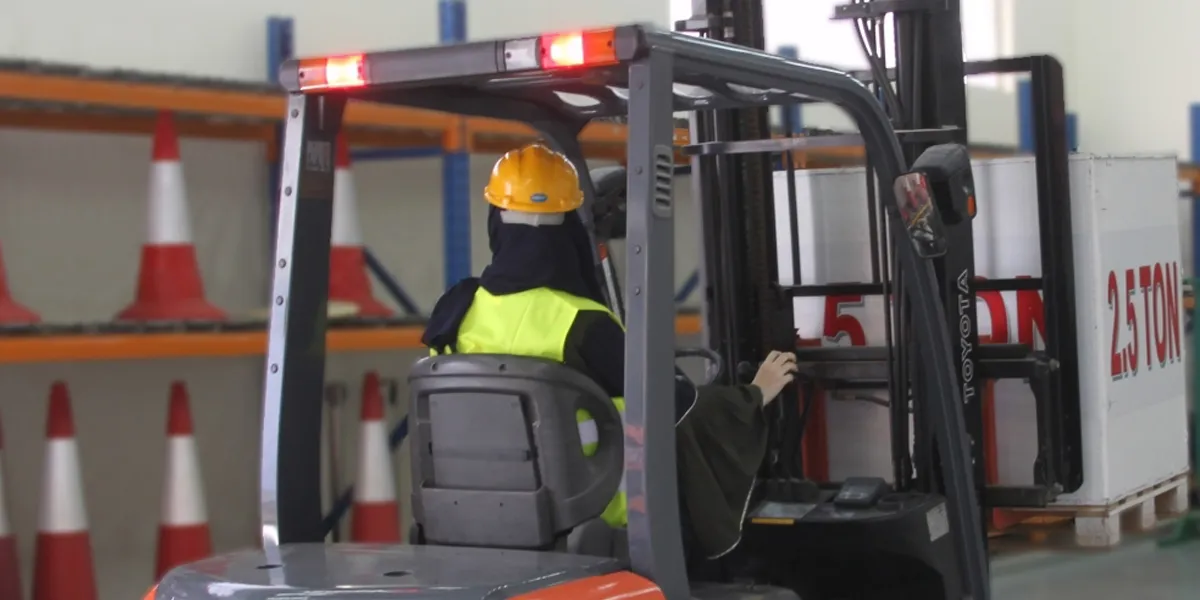
Abdul Latif Jameel Machinery has introduced a new apprentice course in Riyadh to train Saudi women to operate forklifts, after the company signed formal service provider contracts with several national institutions. The company has allocated an experienced and highly qualified team to train the first batch of trainees about forklift-related procedures. Participants in the training program will learn about the safety requirements and standards required for forklift operators, and will receive a completion certificate from Abdul Latif Jameel Machinery at the end of the course. The training course represents an exciting new challenge for Saudi women who have seen numerous new career opportunities open up for them recently, particularly at Abdul Latif Jameel companies. The new training program is part of the company’s policy to be at the forefront of national developments and new initiatives, and further ensures they are keeping up with market changes. Abdul Latif Jameel Machinery directors enthusiastically approved the forklift course as a mark of their support for the Saudi Arabian leadership’s determination to empower all members of society. The new course for women reinforces the company’s belief in the importance of utilizing the potential of Saudi women to deliver on the ambition of Vision 2030. Abdul Latif Jameel Machinery, a subsidiary of Abdul Latif Jameel, is headquartered in Jeddah, and is one of the leading companies in the field of material handling and warehousing equipment in the Kingdom. The company sells and rents equipment and provides spare parts and maintenance. Abdul Latif Jameel Machinery has multiple centers across most of the Kingdom to service customers, and offers specialized consultations in the transportation and storage of materials for various industries, including transportation and distribution, construction, manufacturing, retail, mining, oil and gas, ports, and airport service. The team at Abdul Latif Jameel Machinery secured a new contract with key groundworks contractor, Al Asast Al Watanya Co., which sees the provision of an initial seven Komatsu D275 Dozers. Each unit specialized for mining, heavy-duty and large-scale civil works, featuring powerful engines, sigmadozer blades, and unparalleled operator comfort and safety in the segment. The 50-tonne machines have been sold to the contractor to create construction access from Highway 55 to Area 4 and Zone E site preparation works.
Abdul Latif Jameel Machinery partners with Kanoo Machinery to extend commitment to best in class aftersales support
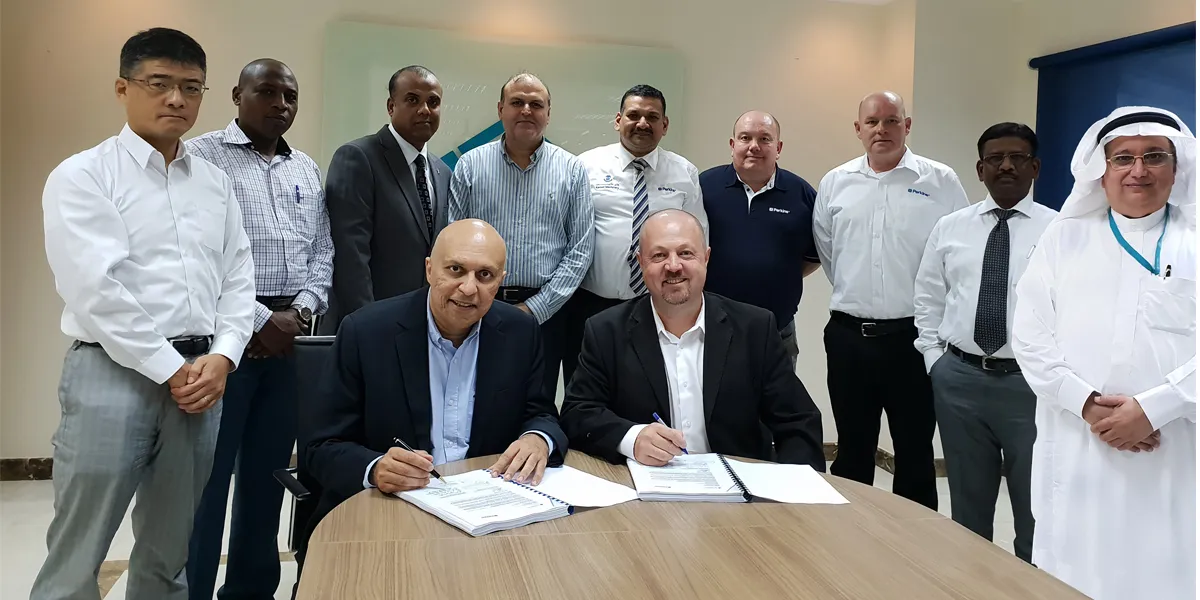
Abdul Latif Jameel Machinery has announced a new strategic partnership with Kanoo Machinery, a regional distributor of Perkins Engines, to provide best-in-class support for Teksan generators. Abdul Latif Jameel Machinery supplies the leading brand of Teksan generators, most of which are powered by Perkins’ diesel engines. With the new strategic partnership, Abdul Latif Jameel Machinery will now offer warranty support along with parts to support Perkins Engines products. The partnership aims to expand and deepen Teksan and Perkins’ presence and aftersales support in Saudi Arabia and meet rising public demand for safe, affordable and reliable power. The announcement was marked at a special event at Abdul Latif Jameel Machinery in Jeddah, attended by senior officials from Perkins Engines, Kanoo Machinery and Abdul Latif Jameel Machinery. Arif Chishti, Managing Director of Abdul Latif Jameel Machinery said: “A Kaizen approach to consistently improving our customers’ journey and experience is central to our work at Abdul Latif Jameel Machinery. The announcement of our partnership with Kanoo Machinery ensures that Teksan and Perkins’ quality commitment is delivered to our customers through Abdul Latif Jameel Machinery.” Executive General Manager, Fergus Burke for Kanoo I&E, states: “With a heritage that dates back more than a century, Yusuf Bin Ahmed Kanoo is one of the largest family-owned multinationals in the Middle East and is proud through Kanoo Machinery to associate with and to appoint Abdul Lateef Jameel Machinery as an OEM Dealer (OEMD) for Perkins diesel engines in the Kingdom of Saudi Arabia.” Graeme De Villiers, Regional Power Manager for Kanoo Machinery added, “To meet the demands of the new generation of technologically advanced Perkins engines entering the market, Kanoo Machinery has chosen to partner with Abdul Latif Jameel Machinery as an OEMD to ensure that Teksan generators powered by Perkins receive the highest standards of warranty support across the Kingdom of Saudi Arabia.” Teksan Generators produce high quality diesel, natural gas and biogas driven generator sets, co-generation, tri-generation solutions and hybrid power systems. Perkins Engines, a subsidiary of Caterpillar, is a diesel engine manufacturer for several sectors including power generation and industrial. The Teksan Generators supplied by Abdul Latif Jameel Machinery are mostly powered by Perkins engines.
Toyota’s BT warehouse solutions products launched in Saudi Arabia
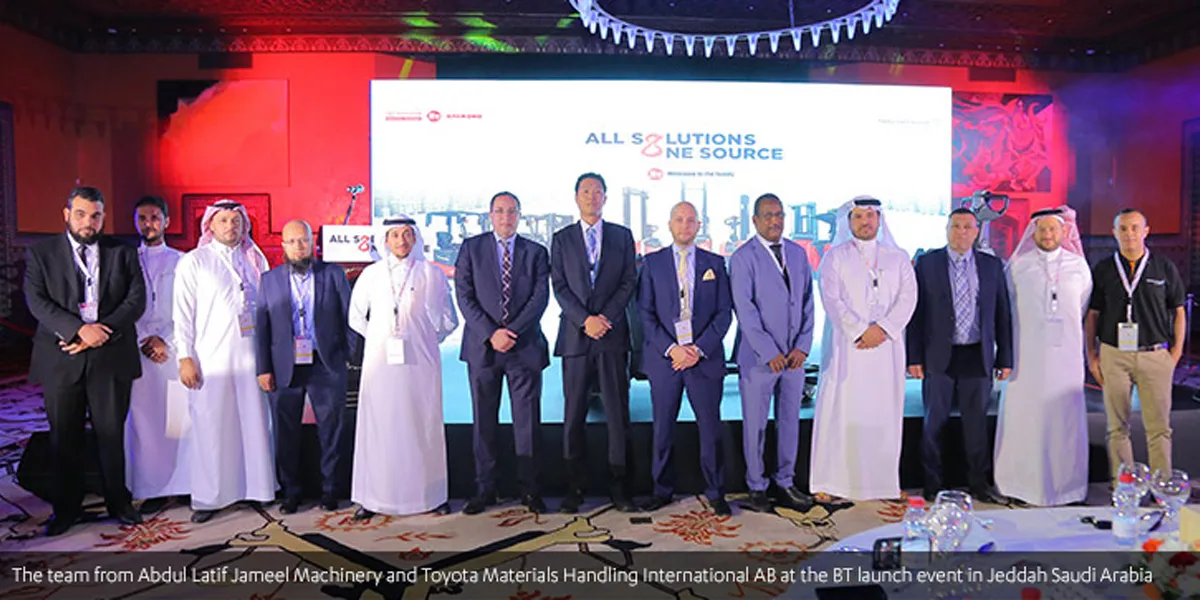
BT, the warehouse equipment solutions brand of the Toyota Material Handling Group, manufactured in Sweden, has been launched in Saudi Arabia by Abdul Latif Jameel Machinery. Founded in Sweden 1946, BT has a strong presence all around the world through its manufacturing locations in Sweden and Italy, international sales and services companies, and independent distributors who not only sell equipment, but also provide full lifetime aftersales services and support. Abdul Latif Jameel Industrial Equipment, part of the renowned Abdul Latif Jameel Machinery brand, has been the distributor for Toyota Industrial Equipment and spare parts in Saudi Arabia for almost 50 years including gasoline, diesel and electric forklift trucks and towing tractors. Their extensive range of product and service solutions today also includes Raymond, and Cascade brands and Godrej Racking, offering comprehensive solutions to meet materials handling and warehousing needs across the Saudi Arabian logistics sector. Abdul Latif Jameel Industrial Equipment operates a network of sales and service centers across the country offering specialized consultancy for industries, such as transportation and distribution, construction, manufacturing, retail, mining, oil and gas, ports, and airport services.